What to Do When a Commercial Door Fails After Hours
A commercial door rarely picks a convenient time to fail. It sticks at closing, the closer gives out after the last customer leaves, the lock stops turning, or an automatic entrance refuses to cycle when staff are trying to secure the building. After hours, the problem feels bigger than the hardware itself because it touches security, safety, and the next business day all at once.
I have seen owners focus on the wrong first question. They ask whether the door can wait until morning. The better question is what risk the failed door creates right now. A rear service door that will not latch is a security problem. A main entrance that jams shut can become an access problem the minute your team returns. A required exit that cannot function properly can create a life-safety issue that deserves immediate attention, even if the building is otherwise closed.
That is where good judgment matters. After-hours commercial door services are not just about getting somebody to show up fast. They are about making the opening safe, secure, and usable enough to protect the property and keep the business from walking into a larger problem the next morning.
Start by identifying the kind of failure you have
Not every door failure is the same, and treating all of them as simple lockouts leads to bad decisions. In practice, after-hours issues usually fall into a few categories. The lock may have failed. The door may be physically damaged after a forced-entry attempt or storm event. The closer, pivot, or hinge system may have given way so the door no longer opens or closes in a controlled manner. Or the panic or exit hardware may not be operating as it should.
The distinction matters because the response changes with it. If the cylinder is the only thing malfunctioning but the door closes and latches, the building may be secure for the night with temporary operational adjustments. If the frame is twisted or the leaf will not seat against the weatherstrip and latch, that same building is exposed even if the lock itself still turns. If the door is part of the way people exit the space, especially in a public-facing business, the issue is not just inconvenience. It may affect whether the path of egress works as intended.
For businesses open to the public, access matters too. At least one entrance door or doorway must meet accessibility requirements, including a minimum clear width of 32 inches when the door is open 90 degrees. Door maneuvering clearances and usable hardware matter as well. Hardware on an accessible door should not require tight grasping, pinching, or twisting. That may not be the first thing on your mind at 11:30 p.m., but it should absolutely be part of the morning plan if the failed opening is the accessible entrance.
What to do in the first few minutes
The best immediate response is calm and practical. Do not force the door harder than necessary. Many expensive repairs begin with someone leaning into a misaligned aluminum storefront door or reefing on panic hardware that already has an internal problem.
Use this short sequence to stabilize the situation:
- Check whether the issue is security, egress, accessibility, or some combination of the three.
- Test the door gently from both sides, if safe to do so, to see whether it is binding, failing to latch, or suffering a lock or hardware fault.
- Keep people away from the opening if the door is hanging, shattered, or closing unpredictably.
- If the building cannot be secured or a required exit is impaired, contact an after-hours provider that handles commercial door services.
- Make a note of what happened, when it happened, and whether there was visible damage or a possible break-in attempt.
That sounds simple, but it keeps people from making the problem worse. A manager who knows the difference between a door that is hard to latch and a door that is no longer safe to use can give a much clearer call to an emergency technician.
I would also add one common-sense rule that saves time. If there are signs of forced entry, do not clean up the area or start dismantling parts. Secure people first, preserve the condition of the opening as much as possible, and let the responding professionals assess what must be done immediately to close and secure the perimeter.
Security can be urgent, but egress can be even more urgent
When a door fails after hours, owners often think about theft first. That is understandable. A door that will not lock, or one damaged during a break-in, leaves the building exposed overnight. In many cases, emergency response is justified on that ground alone.
Still, there is another side to this that deserves equal attention. Some commercial doors serve as part of a required means of egress. In certain higher-occupancy settings and some equipment-room situations, the code requires panic hardware or fire exit hardware. If that hardware is damaged, missing, or not operating properly, you may be looking at more than a maintenance issue.
This is where people sometimes make a poor temporary choice. They chain a bad A-24 Door maintenance door shut from the inside, deadbolt an exit that employees may need in the morning, or prop an opening in a way that seems workable for a few hours but creates a different hazard. After-hours fixes should reduce risk, not shift it. A competent emergency provider will think in terms of both security and safe exit, because a commercial opening is never just a slab and a lock.
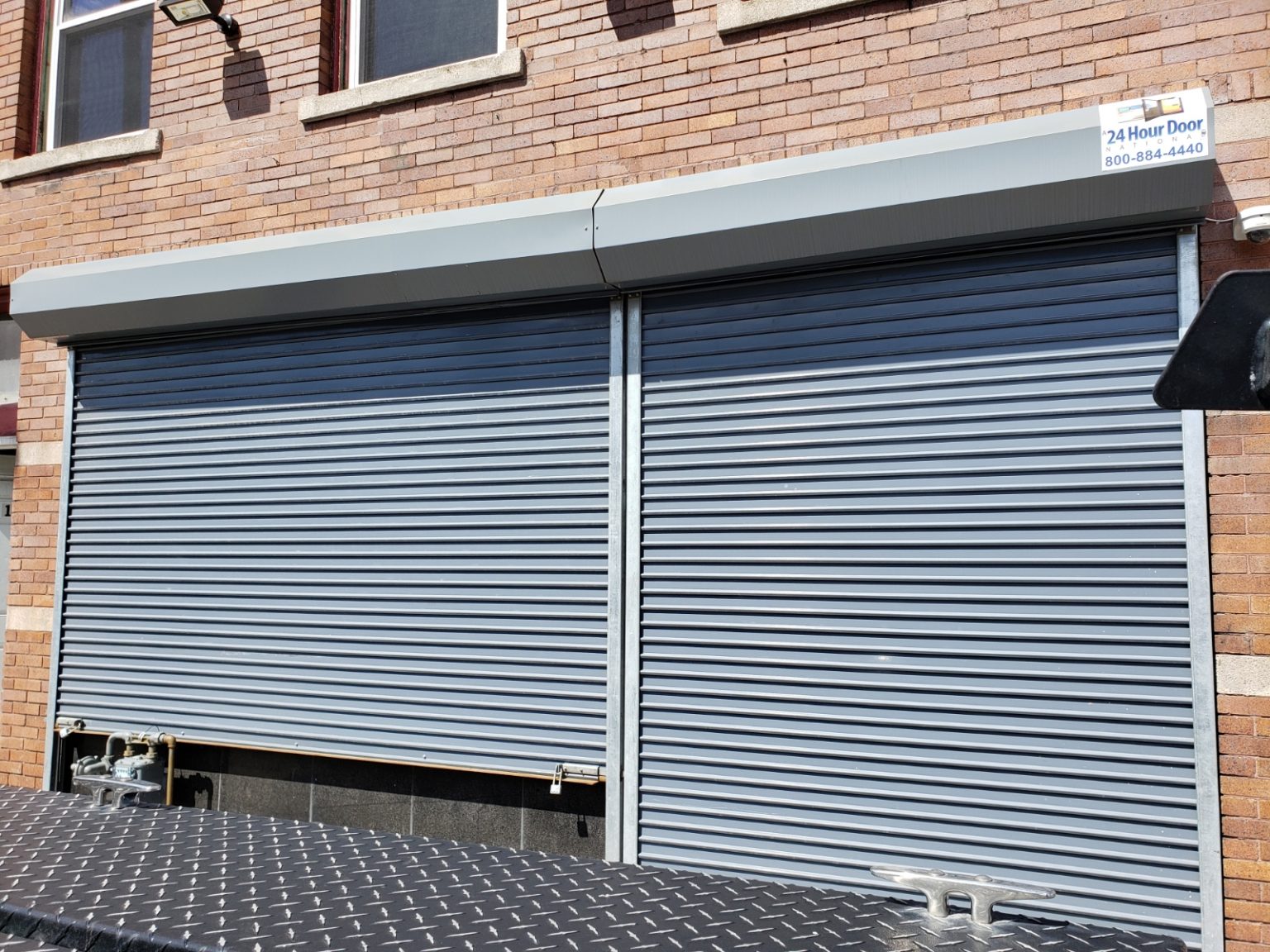
If the failed opening is the only accessible entrance, that adds another layer. ADA guidance is clear that if an accessible entrance is kept locked during business hours, the business should change the policy and keep it unlocked. Where security is a concern, a call box or buzzer can be used instead of simply denying access at that door. That matters after an overnight failure because some businesses try to work around a broken accessible entrance by leaving it locked the next day and directing everyone elsewhere. That A-24 Hour Door National Inc is not the safest or smartest long-term response.
Temporary measures are not the same as a finished repair
A lot of after-hours commercial door services are really stabilization calls. The goal is to secure the opening, restore basic function where possible, and prevent the condition from becoming more dangerous before a full repair or replacement can be completed.
That distinction helps set expectations. A technician responding late at night may resecure the door, adjust hardware enough to restore operation, or protect a damaged opening after a forced-entry attempt. If a full replacement is needed, especially on an entrance door, that may follow later. And if replacement happens, accessibility standards come back into focus because replacing an entry door is treated as an alteration when the work affects usability. In plain terms, the new door must comply with current accessibility requirements.
That can catch owners off guard. They call because a door failed, and they assume the answer is to put back what was there before. Sometimes it is not that simple. If the opening was marginal on clear width, maneuvering space, or hardware usability, the failure becomes the moment to fix those issues properly.
Older businesses have a bit more room for practical improvements in some cases. Full replacement is not always the first and only path. For example, swing-clear hinges may provide about 1.5 inches of additional clearance. On the right opening, that can make a meaningful difference. The point is not that every old doorway can be solved with hinge changes, because that would be too broad. The point is that the emergency call should lead into a thoughtful daytime review, not a rushed like-for-like swap that ignores accessibility.
How to decide whether the door can wait until morning
This is the decision owners most want help with, and it is rarely answered well by blanket advice. A door can usually wait until morning only if the building remains secure, people are not at risk, and the opening is not going to create a code or access problem when operations resume.
A lock cylinder that is stubborn but still lets the door latch and secure may be manageable overnight. A damaged closer that leaves the door slamming can sometimes wait if the building is closed, the opening is not in use, and it can be safely isolated. By contrast, a storefront door that will not latch after a storm or a failed exit device on a required egress door should not be pushed down the road just because the sales floor is dark.
The practical test is simple. Ask yourself what happens if no one touches this opening again until opening time. If the answer includes exposed inventory, an unsecured perimeter, blocked access for customers or employees, or uncertainty about safe exit, call for emergency service.
This is especially relevant in metro areas where after-hours help is commonly available. In the Atlanta market, for example, emergency repair and 24-hour response are routinely advertised for commercial door and locksmith needs, including break-in response and entry-door repair. That does not mean every issue requires a midnight dispatch. It does mean businesses often have a real option when waiting would create more trouble than it saves.
What to tell the emergency provider
A short, accurate description does more than speed up arrival. It helps the provider understand whether the job sounds like a lock issue, a hardware failure, visible impact damage, or a security breach. That affects what tools, parts, and expectations go into the call.
When you place the call, try to have these details ready:
- Whether the door is an entrance, rear service door, or required exit.
- Whether the building can currently be locked and secured.
- Whether the door opens, closes, or latches at all.
- Whether there are signs of forced entry, shattered glazing, or storm damage.
- Whether the failed opening is the only accessible entrance or a primary customer entrance.
You do not need perfect terminology. Most owners are not expected to identify closers, pivots, stile damage, or panic devices by name. Clear descriptions are enough. “The main front door closes but will not latch,” is better than guessing. “The accessible front entrance is locked because the operator is down,” is even better because it signals an access issue along with the mechanical one.
If you manage multiple locations, this is a good place for a simple internal procedure. The person on site should know who approves emergency calls, where the alarm and lock information is kept, and how to describe the problem without improvising. That sort of preparation matters most when everyone is tired and ready to go home.
The next morning, look beyond the immediate fix
One of the easiest mistakes after an after-hours door failure is to treat the event as closed once the opening works again. Sometimes that is enough. Often, it is not. A commercial door usually fails for a reason. Wear, misalignment, old hardware, impact, and deferred maintenance tend to show up before total failure, even if nobody connected the dots.
The next business day is the right time to ask harder questions. Is this entrance carrying more traffic than its hardware can comfortably handle? Is the accessible route still working the way it should? If a replacement is now likely, will the new opening meet accessibility expectations instead of repeating an old noncompliant setup? If security was the concern, does the current policy make sense, or would a call box or buzzer provide better access without giving up control?
That review should be especially careful if the failed door serves the public. At least one entrance needs to comply with accessibility standards, and the details matter. Clear width is not just a technicality. A full 32 inches of clear width when the door is open 90 degrees can determine whether many people can use the entrance independently. Maneuvering clearances matter too, because a compliant-width opening still fails people if there is not enough room to approach and operate it. Hardware matters in day-to-day use as much as in an emergency, since knobs or devices that require tight grasping, pinching, or twisting can defeat access even when the door technically opens.
Those are not fringe considerations. They are part of whether the business can open normally and serve the public fairly after the crisis passes.
A real-world way to think about risk
Imagine two scenarios at the end of the night. In the first, a rear employee door has a lock issue, but the door still closes and secures with another approved locking point and the opening is not needed again until the morning. That is inconvenient and should be repaired, but it may be stable enough to defer a few hours.
In the second, the front public entrance took damage during a break-in attempt. The leaf drags, the hardware is unreliable, and by the next morning that entrance may be the only practical route customers will use. If that is also the accessible entrance, the stakes rise fast. Now you are balancing perimeter security, staff safety, customer access, and compliance concerns all at once. Waiting just because the building is technically closed would be poor judgment.
That is why experienced people in this trade tend to think less about the phrase “door repair” and more about continuity. Can the business secure the site tonight? Can it reopen without exposing people to unnecessary risk? Can it preserve access without inventing a workaround that creates another problem? Those are the questions that matter.
Prevention is less dramatic, but it is cheaper
After-hours calls will never disappear completely. Storms happen. Break-ins happen. Hardware fails without much warning. Still, a lot of emergency work grows out of doors that were telling on themselves for months. The closer leaked. The latch dragged. The panic device felt loose. Staff learned a little shove-and-lift move that “always works.” That is usually the sign that it will not work one night soon.
The best relationship with commercial door services is not purely reactive. A business that addresses alignment issues, sticking hardware, and access concerns early has fewer ugly surprises after closing time. It also has more control over whether the final answer is adjustment, repair, or replacement. Once a door fails at 10 p.m., the options narrow quickly because the immediate goal becomes stabilization.
There is also a human side to this. Employees remember the night the front entrance would not lock, or the morning a customer using mobility equipment could not get through the only usable public door. Those moments shape how safe and competent a place feels. A commercial door is one of the most used parts of a building and one of the least appreciated until it stops working.
When the smart move is to call now
If you are standing in front of a failed commercial door after hours, the safest rule is this: call now when the opening is unsecured, when safe egress is in doubt, or when the failed door is critical to accessible entry for the next business day. If the issue is truly minor and the building is secure, you may be able to wait until morning. But that should be a decision based on risk, not optimism.
A good after-hours response does not just silence the immediate problem. It protects the building, supports safe use, and sets up the right permanent fix. That might mean securing a damaged opening after a break-in, restoring basic function to an entrance, or recognizing that the next repair or replacement needs to meet current accessibility expectations. The door may have failed after hours, but the consequences rarely stay there.